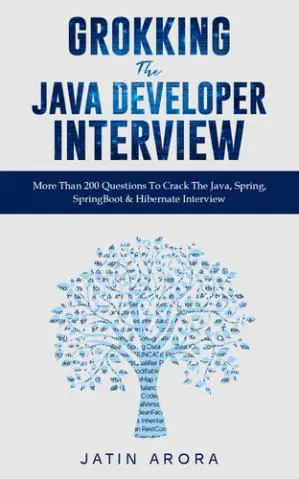
Preparing for a technical interview can feel overwhelming, especially when the role involves a powerful and widely used language like Java. Many developers know the basics of Java programming, but interviews often go beyond syntax and require a deeper understanding of concepts, problem solving, and real world application.
The book “Grokking The Java Developer Interview” by Jatin BArora is designed to bridge that gap. It helps developers move from theoretical knowledge to practical interview readiness. Instead of memorizing answers, the book focuses on understanding core Java principles, solving coding challenges, and preparing candidates for real interview scenarios.
Whether you are a beginner developer, a final year computer science student, or a professional preparing for a new role, this guide offers structured preparation that improves both confidence and technical clarity.
Understanding the Purpose of Grokking The Java Developer Interview
Technical interviews for Java developers often include several stages such as coding tests, concept based questions, system design discussions, and practical debugging tasks. Many candidates fail not because they lack knowledge, but because they struggle to apply concepts under pressure.
“Grokking The Java Developer Interview” focuses on helping readers truly understand Java fundamentals rather than just memorizing definitions. The word grokking means deeply understanding something until it becomes intuitive. This approach makes the book particularly valuable for developers preparing for technical assessments.
The book emphasizes clarity in topics like object oriented programming, data structures, Java memory management, multithreading, and design patterns. These areas frequently appear in Java developer interviews across startups, product companies, and enterprise organizations.
Key Java Concepts Covered in the Book
1. Object Oriented Programming in Java
Object oriented programming is the foundation of Java development. The book explains concepts such as classes, objects, inheritance, polymorphism, abstraction, and encapsulation with practical examples.
Understanding these principles is essential because interviewers often ask scenario based questions. For example, a developer may be asked to design a system using inheritance or explain how polymorphism improves code flexibility.
The book also demonstrates how to write cleaner and reusable code using OOP principles, which is a critical skill for professional Java developers.
2. Data Structures and Algorithms
Many Java interviews include coding challenges involving arrays, strings, linked lists, stacks, queues, and trees. The book introduces these data structures with problem solving strategies rather than just theoretical explanations.
For example, it may show how to reverse a string efficiently, detect duplicates in an array, or implement stack based solutions. These examples help readers understand algorithmic thinking and improve coding efficiency during interviews.
Learning these problem solving techniques helps developers handle coding rounds confidently.
3. Java Memory Management
One of the topics that frequently confuses developers is Java memory management. Interviewers often ask questions related to heap memory, stack memory, garbage collection, and memory leaks.
The book simplifies these topics by explaining how the Java Virtual Machine manages memory. It also provides examples that demonstrate how improper object handling can lead to memory issues.
Understanding these concepts helps developers write more efficient programs and answer advanced interview questions with clarity.
4. Multithreading and Concurrency
Modern applications often rely on parallel processing. Because of this, many companies test a candidate’s knowledge of multithreading and concurrency.
The book covers important concepts such as thread lifecycle, synchronization, thread safety, and concurrent collections. It explains how multiple threads interact with shared resources and how developers can avoid common issues like deadlocks and race conditions.
These insights help candidates prepare for complex technical questions that are common in senior developer interviews.
5. Java Design Patterns
Design patterns are reusable solutions to common software design problems. Many interviewers expect candidates to understand patterns such as Singleton, Factory, Observer, and Builder.
“Grokking The Java Developer Interview” introduces these patterns with practical use cases. Instead of presenting them as abstract theory, the book shows how they appear in real software projects.
Learning design patterns improves problem solving ability and demonstrates strong software architecture knowledge during interviews.
Practical Interview Preparation Strategies
Technical knowledge alone does not guarantee success in interviews. Candidates also need to learn how to communicate their ideas clearly.
The book encourages developers to practice explaining their thought process while solving coding problems. Interviewers often evaluate how candidates approach a problem rather than just the final solution.
Another useful strategy discussed in the book is breaking complex problems into smaller logical steps. This technique helps developers stay organized during coding rounds and reduces the chance of errors.
Practicing mock interviews and solving timed coding challenges can also significantly improve performance.
Benefits of Learning Through Structured Interview Preparation
Studying from a structured resource like “Grokking The Java Developer Interview” offers several advantages.
First, it organizes important topics in a logical sequence. This prevents developers from feeling lost while preparing.
Second, it focuses on commonly asked interview questions and real coding challenges. This practical approach ensures that readers spend time on skills that actually matter in interviews.
Third, it strengthens conceptual understanding rather than promoting memorization. This deeper understanding helps developers adapt to different types of technical questions.
Some online learning platforms and digital libraries, including resources available on Netbookflix, also support structured learning by providing educational materials that complement technical books and programming guides.
Tips for Cracking a Java Developer Interview
Practice Coding Regularly
Consistent coding practice improves problem solving speed. Platforms offering coding challenges can help developers test their understanding of data structures and algorithms.
Focus on Core Java Concepts
Interviewers frequently ask questions related to OOP, collections framework, exception handling, and memory management. Strengthening these areas is essential.
Understand Real World Applications
Instead of memorizing definitions, try to understand how Java concepts apply to real projects. Interviewers often ask practical questions to evaluate this knowledge.
Improve Communication Skills
Explaining solutions clearly is an important interview skill. Practicing with peers or mock interviews can help developers become more confident.
Review Past Interview Questions
Studying previous Java interview questions can help identify common patterns and frequently tested topics.
Frequently Asked Questions (FAQs)
1. What is Grokking The Java Developer Interview about?
It is a guide that helps developers prepare for Java technical interviews by explaining core Java concepts, coding problems, and interview strategies.
2. Who is the author of Grokking The Java Developer Interview?
The book is written by Jatin BArora, focusing on practical Java interview preparation.
3. Is this book suitable for beginners?
Yes, beginners can benefit from the explanations of Java fundamentals, though basic programming knowledge is helpful.
4. Does the book include coding problems?
Yes, it includes coding challenges and examples designed to improve problem solving skills for Java interviews.
5. Why are data structures important for Java interviews?
Data structures help developers solve problems efficiently, which is why they are commonly tested in technical interviews.
6. Does the book explain Java design patterns?
Yes, it introduces important design patterns and explains how they are used in real software development.
7. How important is multithreading in Java interviews?
Multithreading is a critical topic because many modern applications require concurrent processing.
8. Can this book help experienced developers?
Yes, experienced developers can use it to refresh their knowledge and prepare for advanced technical interviews.
9. How long does it take to prepare for a Java interview?
Preparation time varies depending on experience, but consistent practice over several weeks usually leads to better results.
10. What is the best way to practice Java interview questions?
Combining coding practice, concept revision, and mock interviews is one of the most effective strategies.
Conclusion
Preparing for a Java developer interview requires more than just knowing the language syntax. Candidates need strong problem solving abilities, a deep understanding of Java fundamentals, and the confidence to explain solutions clearly.
“Grokking The Java Developer Interview” by Jatin BArora provides a structured approach that helps developers build these skills step by step. By focusing on core concepts, real coding challenges, and practical interview strategies, the book helps readers develop the mindset needed to succeed in technical interviews.
For aspiring Java developers and experienced programmers alike, mastering these concepts can open doors to better opportunities and stronger career growth in the world of software development.
Leave a Reply